Welcome! Feel free to browse the
archive or subscribe via
RSS. If you'd like to hear
about upcoming things, consider joining my
email newsletter. I also write and
publish things monthly for my
AV Club.
Since I launched my Zine Club project
in spring of 2024, I've mailed out a total of over 200 Mystery
Object packages to people in 8 countries. It's been a fun (and
sometimes challenging) project that helps keep me creating
weird art and brainstorming new ideas regularly.
The whole point of the Mystery Objects is that no one who
subscribes to them knows what the next one will be until they
open their bimonthly package. Last November, after sending out
the first few Objects of the project, I made a
reveal post
where I shared everything that had been sent so far. Well,
it's been almost a year since then, so I am sharing another
batch of Objects that I've made since then... Here is the
reveal!
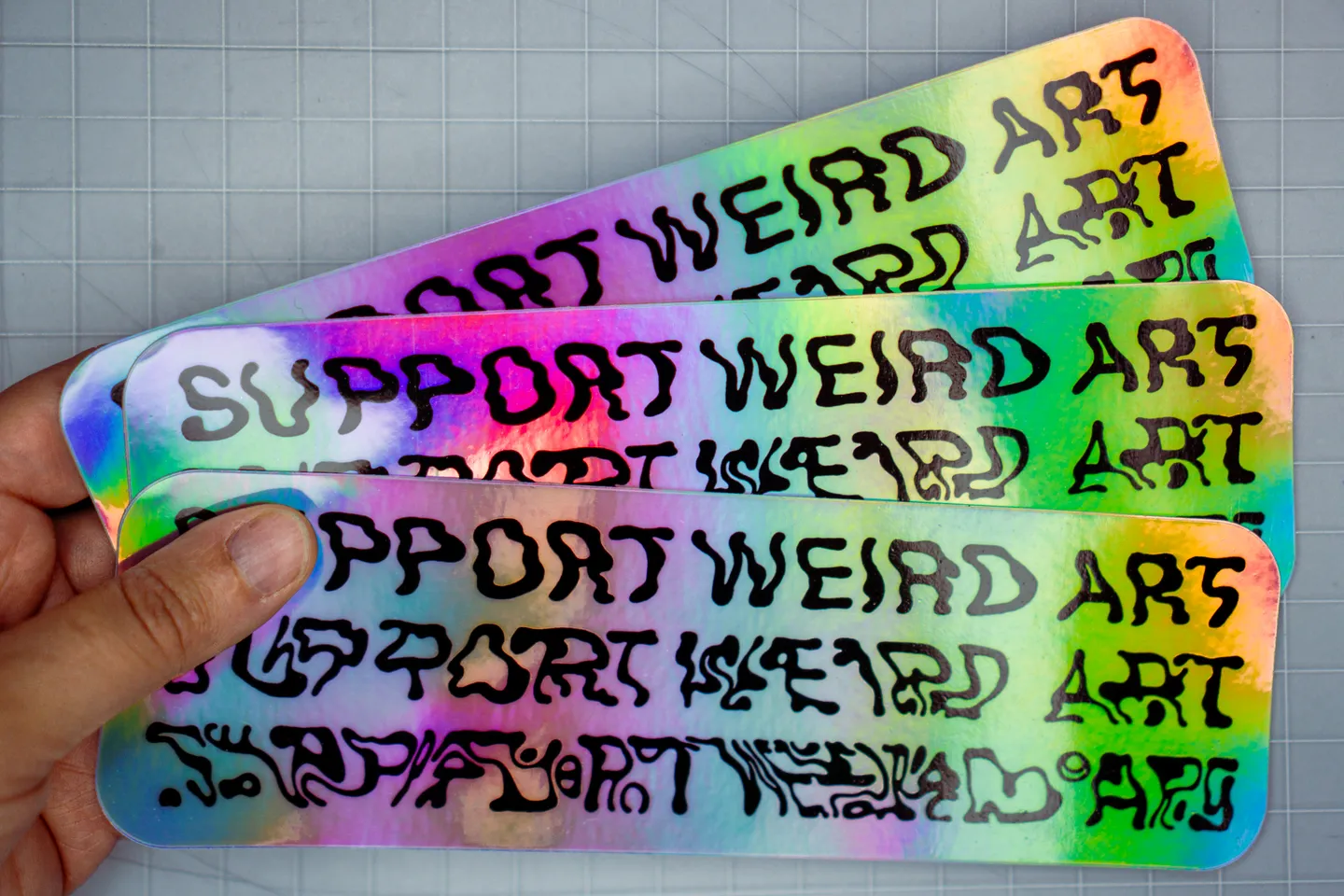
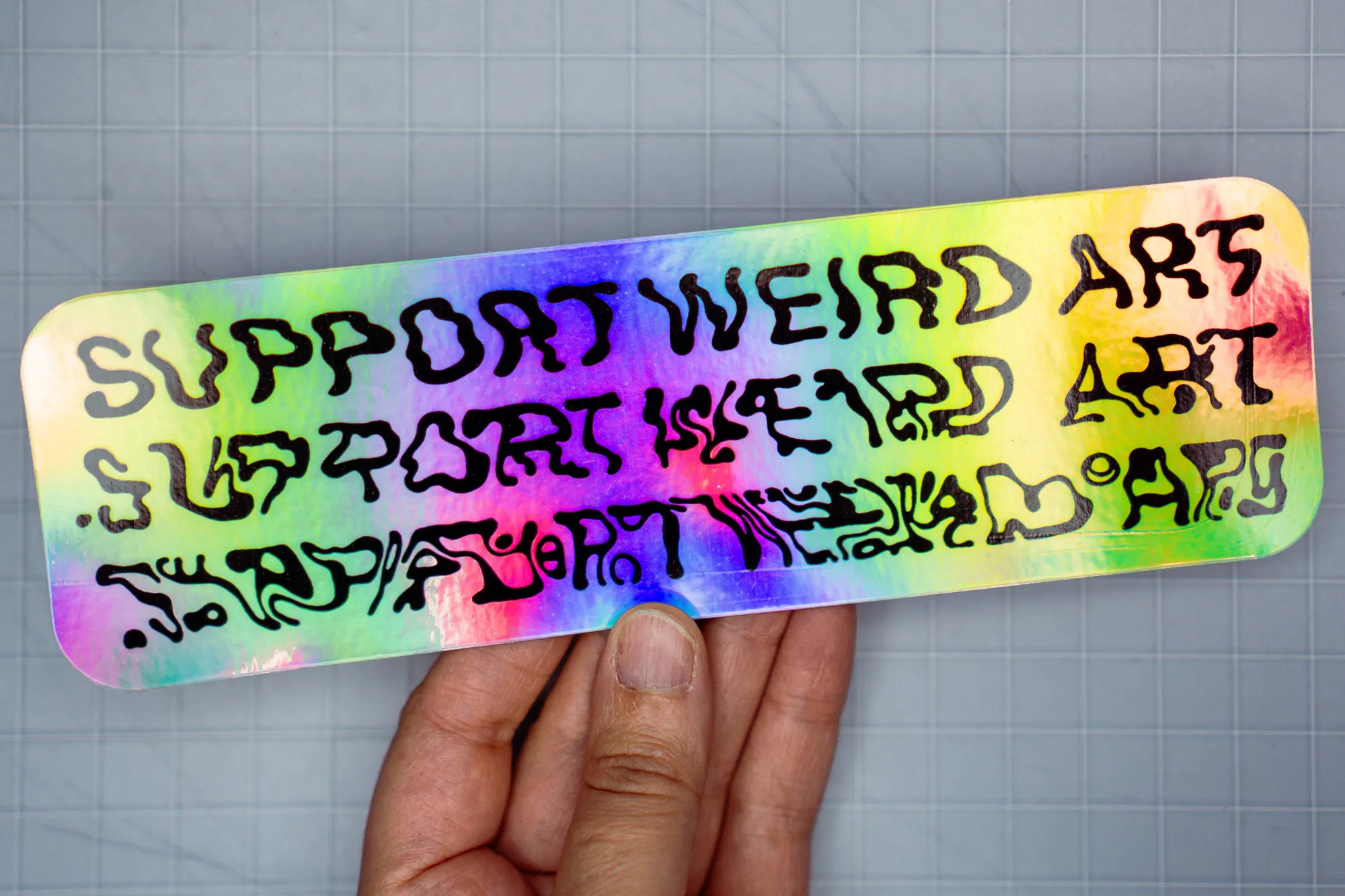
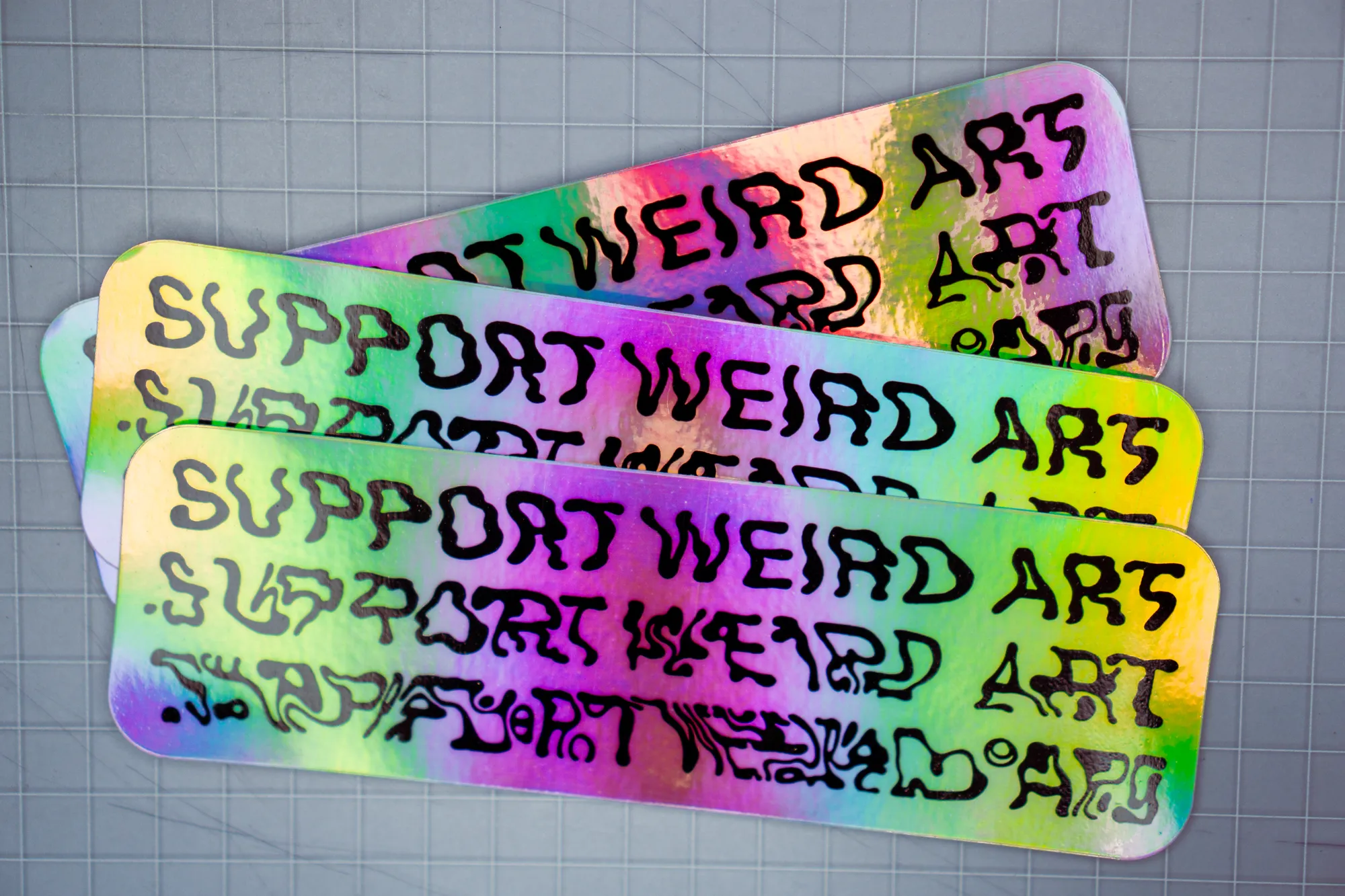
Support Weird Art is the official slogan of Zine
Club. So of course I had to make something to let people
spread the word. These holographic stickers seemed pretty
effective, and they have the bonus of being kind of weird
themselves.
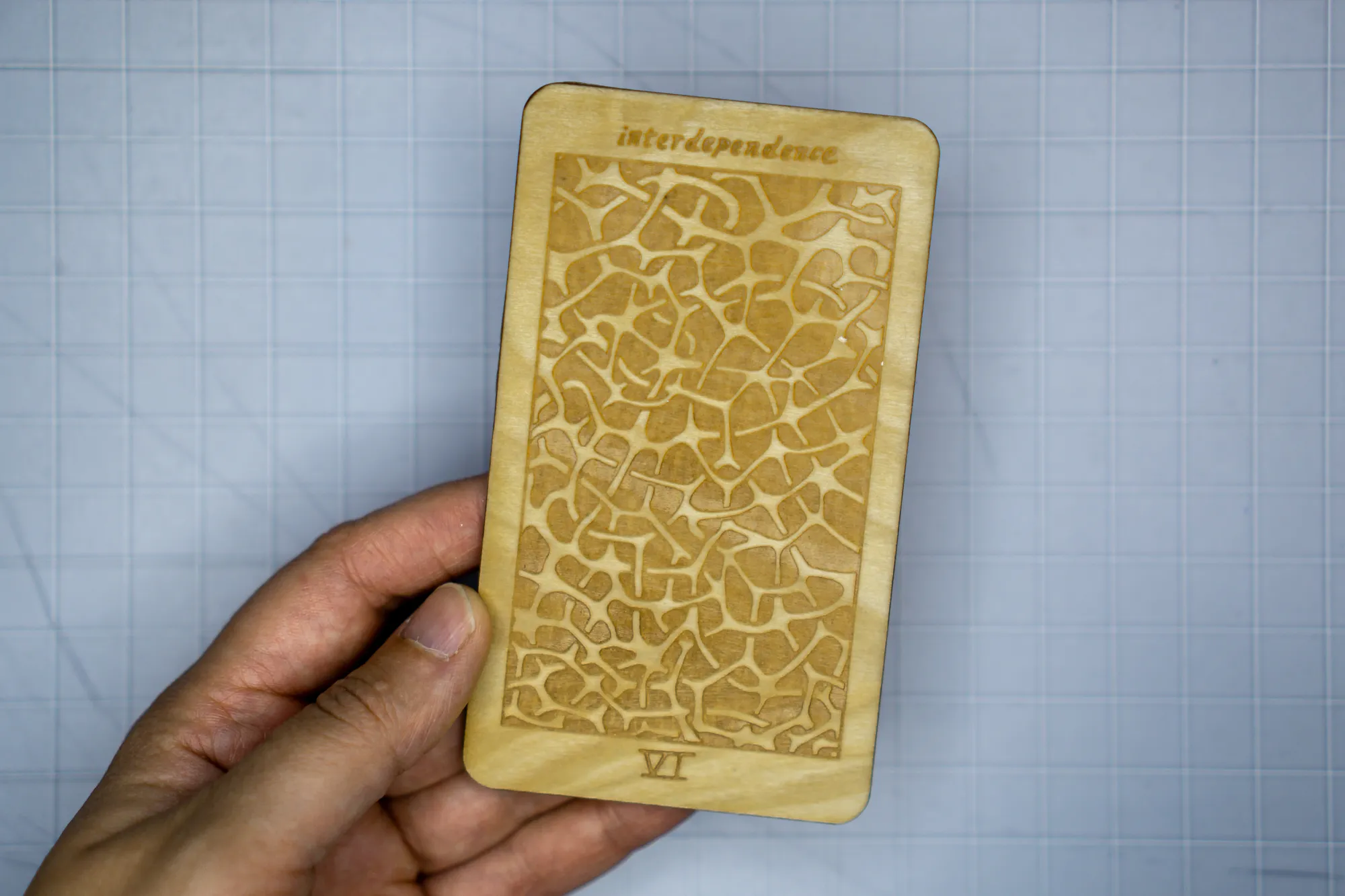
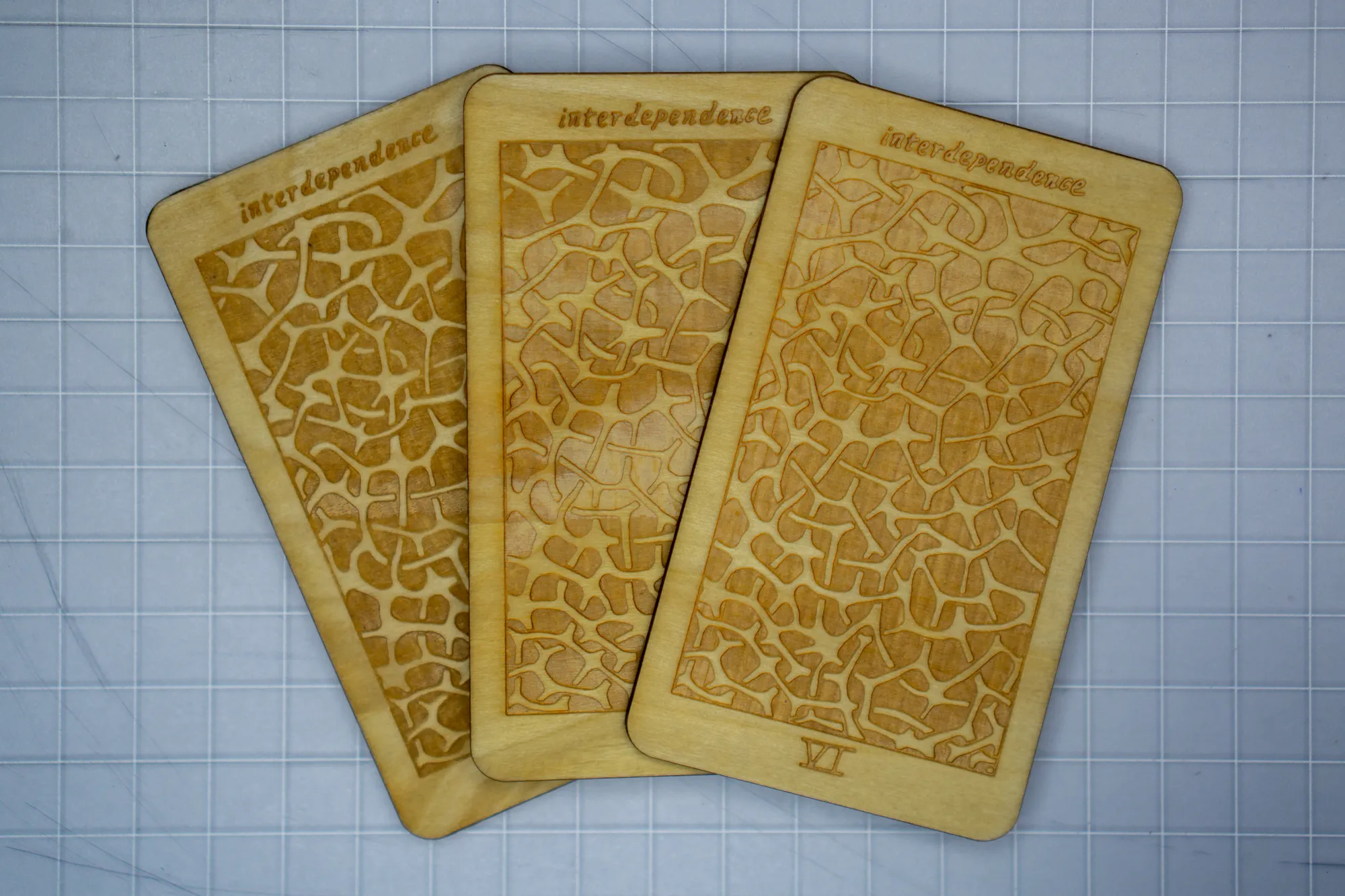
Interdependence is a card from my
tarot of subtle forms
deck. For this Object, I laser-cut and engraved the design
into wood. This was my first time using the laser cutter at my
local makerspace, and I was quite happy with the results.
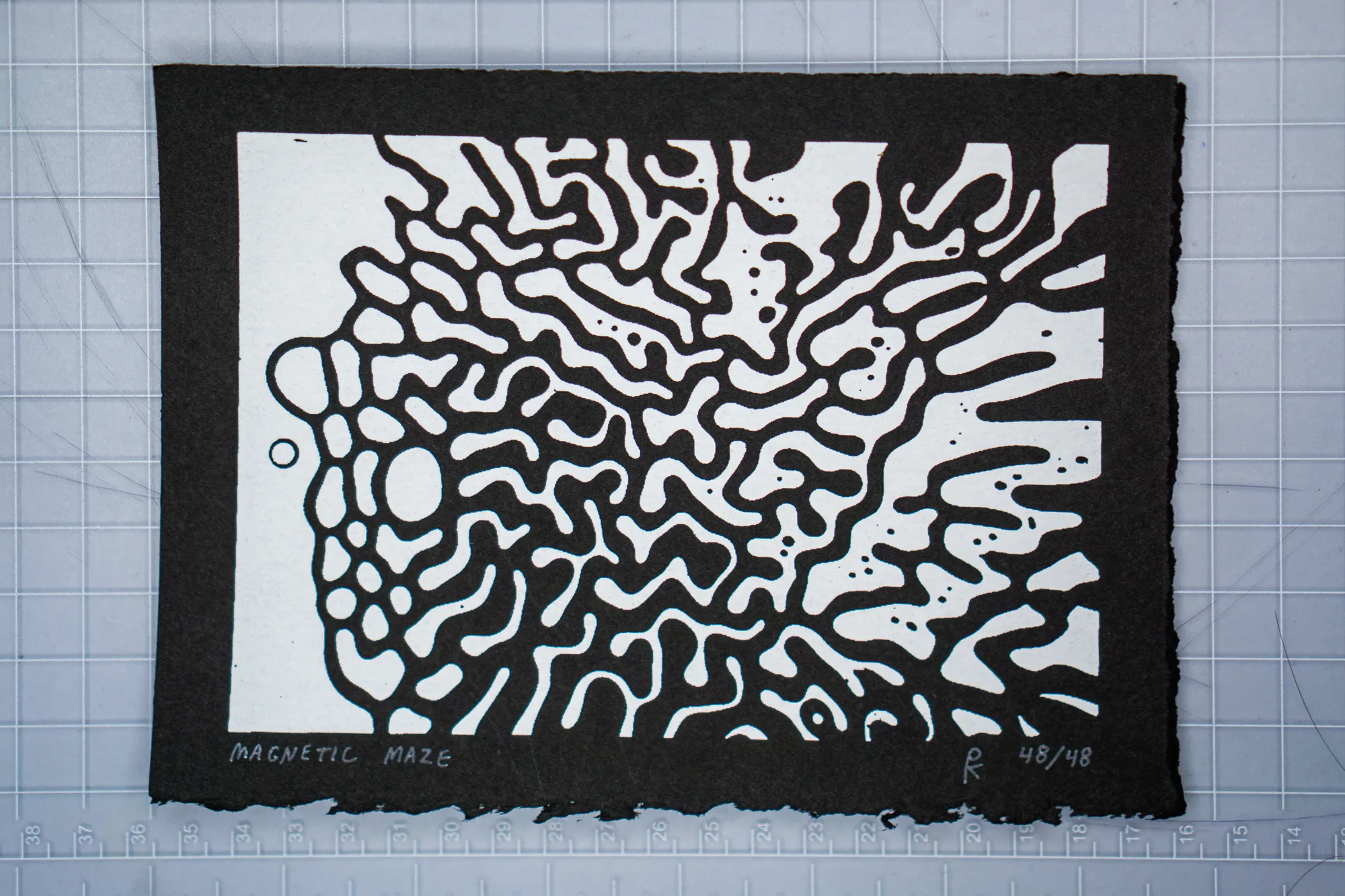
I love silkscreen because it allows for printing with light
ink on a dark background (a difficult task for most other
print methods). However, before moving to New Haven and
joining the makerspace, it had been a long time since I'd had
access to screen printing equipment. This is the first print I
made after gaining access to the print shop there, and I am
super excited to do more with it soon. The design of this
print is a still from some footage I recorded of ferrofluids,
and it's titled Magnetic Maze.
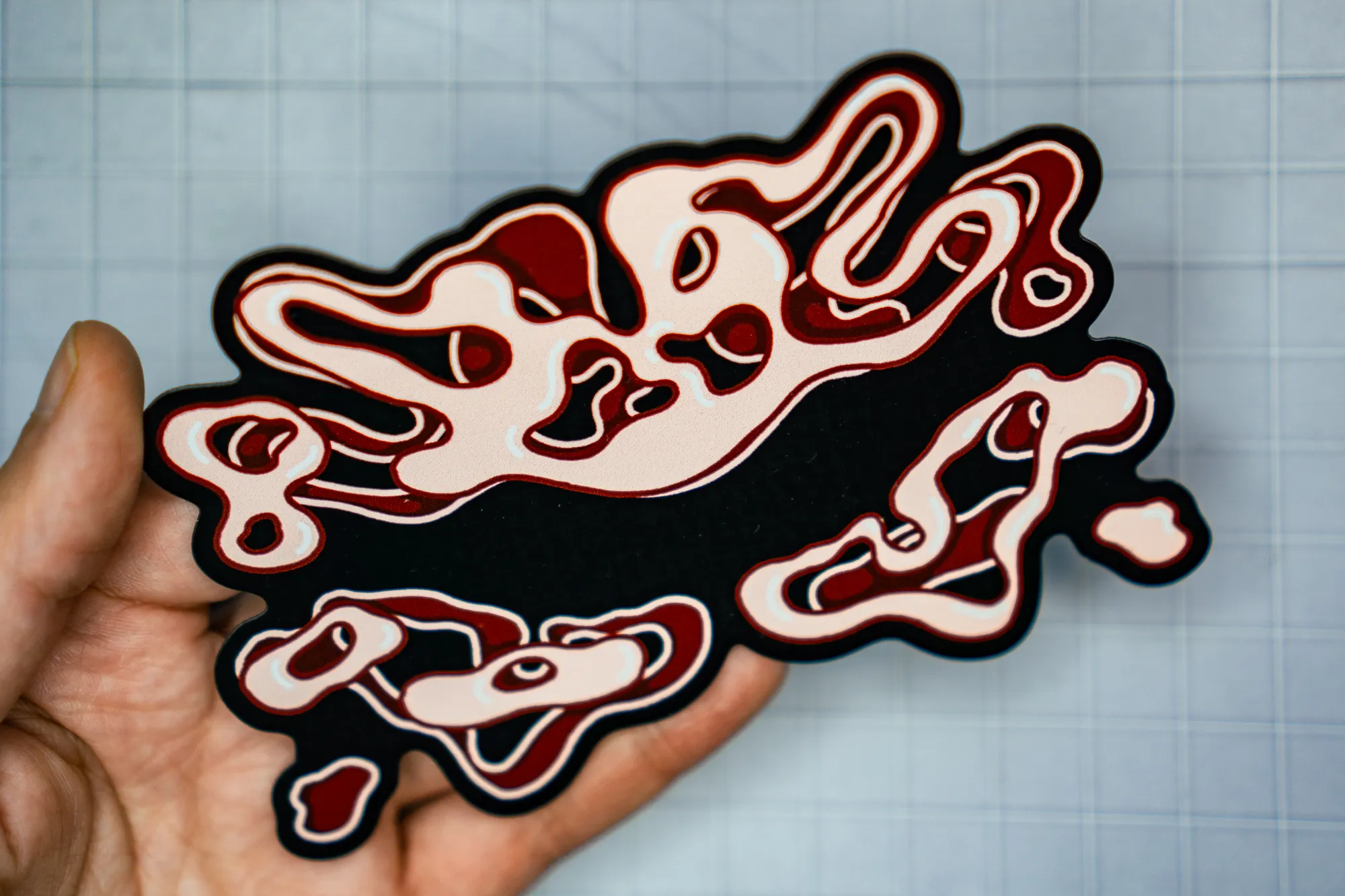
This is a fridge magnet! The abstract design is based on a
very weird analog video feedback recording called
Morphogenesis I, which is part of my
Experiments in Public
series. I'll embed it below so you can see the origins:
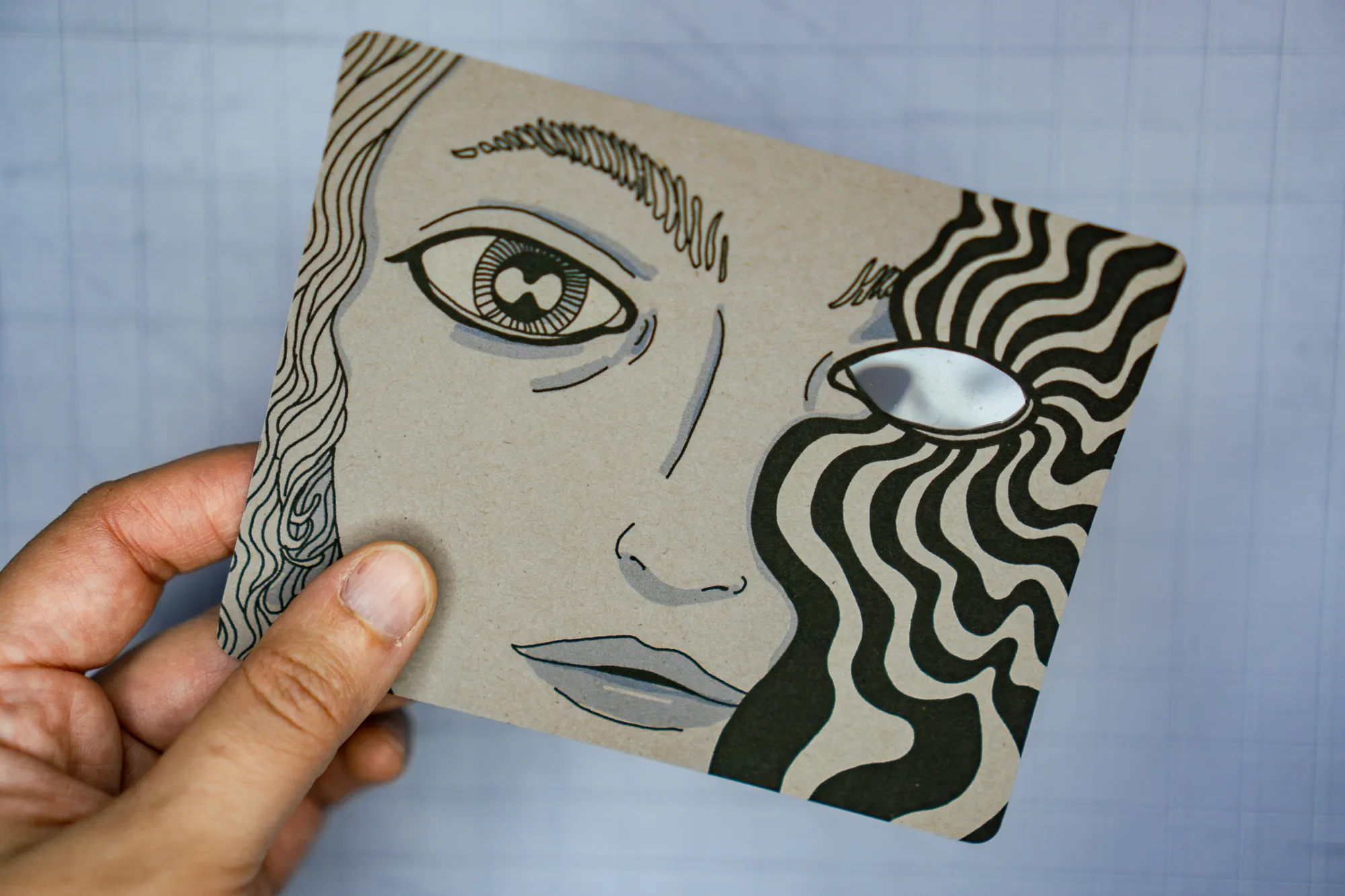
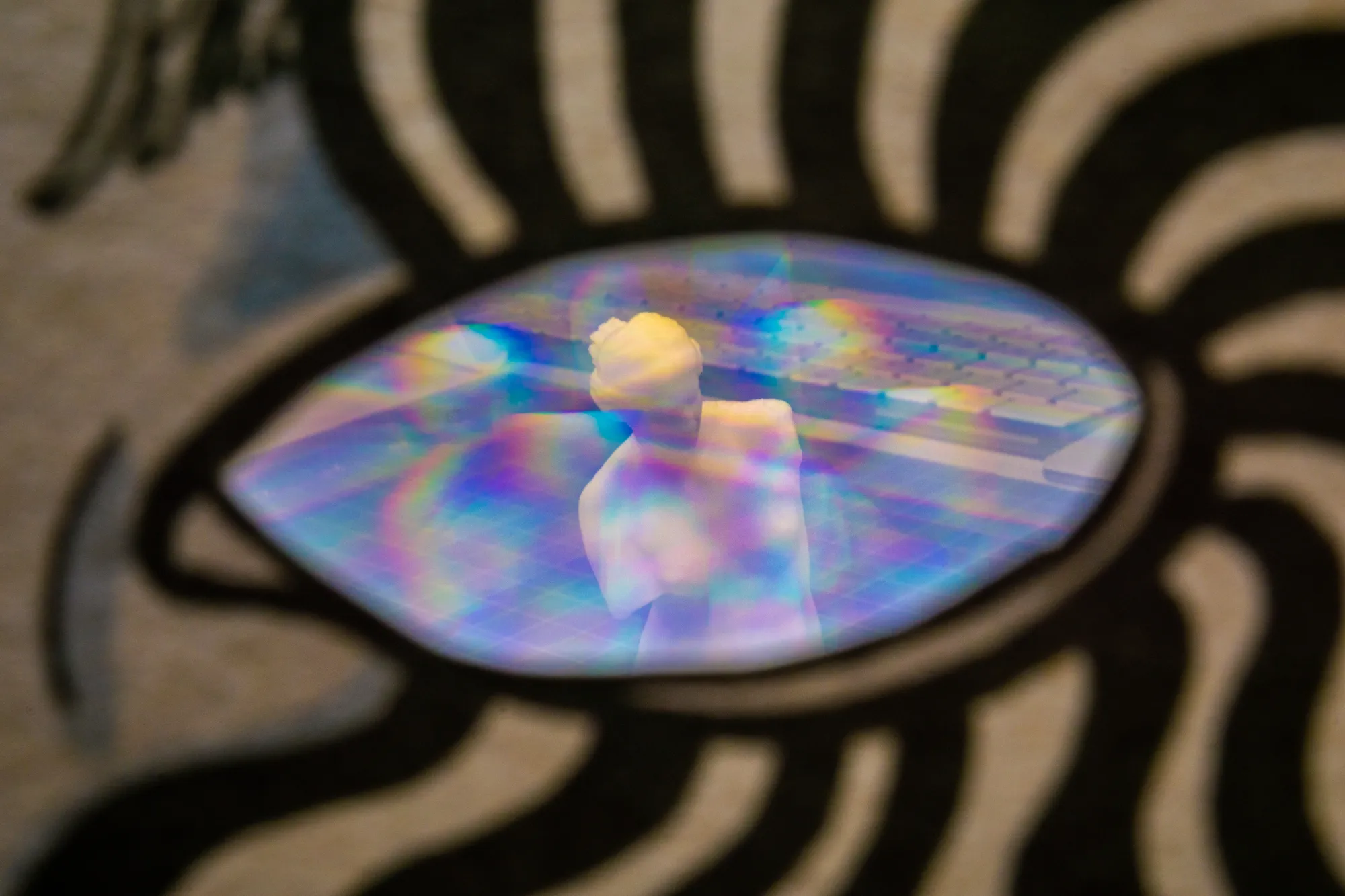
Lastly, I made this small print on textured gray cardstock,
with an insert of diffraction grating in the cutout of the
eye. That is the kind of thin plastic film that splits apart
wavelengths of light and makes everything look like rainbows!
(Miniature Venus de Milo statue not included.)
To current members of Zine Club, I appreciate your support and
participation and, occasionally, patience. Thanks to you, Zine
Club has existed for 20 months and continues to be a source of
fun and mystery to both the members and the maker!
If getting strange, mysterious packages at regular intervals
sounds up your alley, check out the zine club webpage for more
info: palomakop.tv/zine-club. I'm
currently working very hard to bring you the next mystery
object in a few weeks, so it's a good time to get on board!
And even if you don't sign up right now, you can find out what
the next batch of mystery objects were in... *checks watch* a
year! Assuming that the pattern of these reveals continues.
Thanks for reading, and remember, however you choose to do
so... be sure to SUPPORT WEIRD ART!
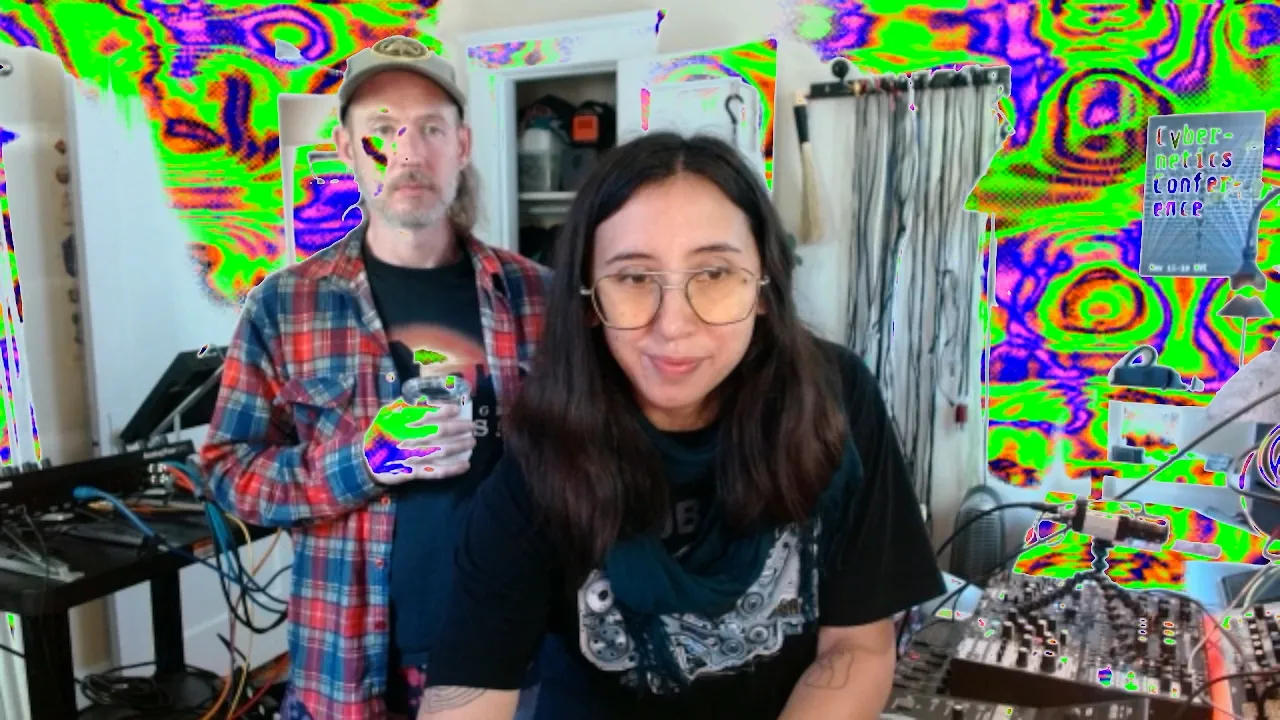
On October 3,
REALITY ORP performed live over
video chat for the
Internet Archive's ongoing series, titled:
Essential Music: Concerts from Home. This series
began during the pandemic in 2020, and the idea was to kick
off each virtual staff meeting with a short live performance
by a different artist. Due to extreme popularity among the
staff, the series has continued through to today.
You can check out a recording of our set below, and eventually
it will also be on the
Internet Archive's collection of past installments of the
series. And they are also looking for more artists to join, so if
you'd be interested in doing a short set for them over Zoom,
consider responding to their
open call!
I am a big fan of the Internet Archive. I did a small
volunteer project for them a while ago and know some of the
people who work there, and have visited both their main
office, and one of their warehouses, which was pretty wild to
see. (We even randomly accidentally attended their in-person
staff luncheon two years ago...)
They are a non-profit and have done some great work, including
making it possible to
play old video games in the browser. It was a pleasure to get to perform for some very nice
people. Many thanks to
Kevin
for the invitation!
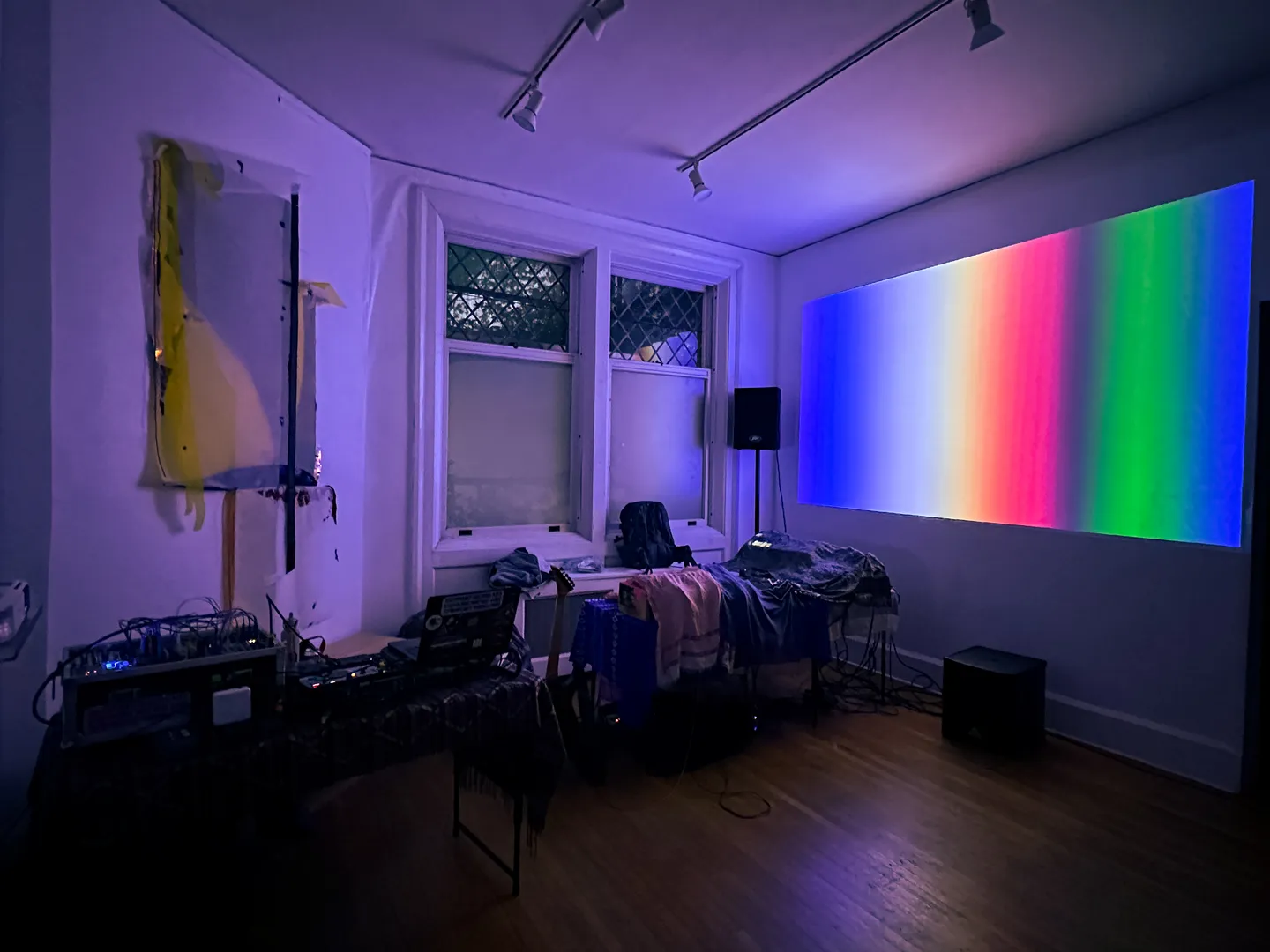
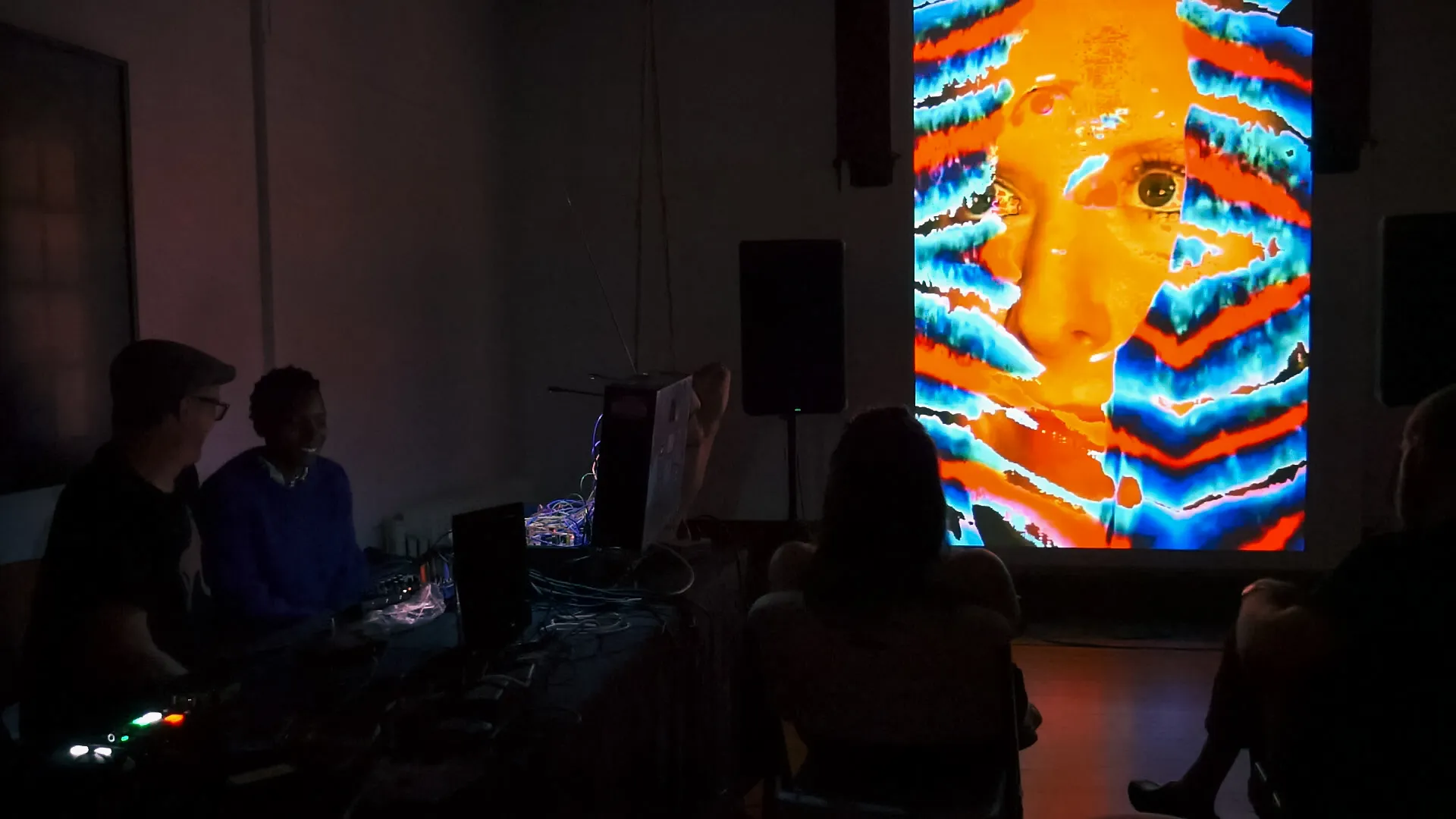
Last Thursday, Andrei and I performed again as
REALITY ORP at another
Weird Music Night
event. This one was New Haven, which is where we live and also
where that event series normally takes place.
Ely Center
is moving locations soon, so this will be the last Weird Music
Night in their current space, an ornate, crumbling mansion
with carved banisters. I am glad that we got to play in that
space before they moved. Because there are so many rooms,
everyone usually gets to set up in their own area and then the
audience just moves from one room to the next when another act
begins. Compared to hasty set changes in cramped spaces in
Brooklyn where everyone has to move their tables around or
break down gear right after playing, it is quite luxurious,
and makes for a fun experience as each new space becomes
activated.
Our friend
Kit Young
also performed as New Haven Noise Machine, a collaborative
project with his friend Tryx. They live-scored a bunch of
video portraits that Kit shot at the
Video Sync
event last month in Portland, OR (which Andrei helped
organize!)
Some local friends came out, as well as a couple who came from
neighboring towns in Connecticut. I was given a CBD seltzer
and a slice of very diversely topped pizza. Many thanks to
John O'Donnell
for hosting and organizing again, and to Merlin and the
amazing crew of Ely Center elves for all their work and
energy.
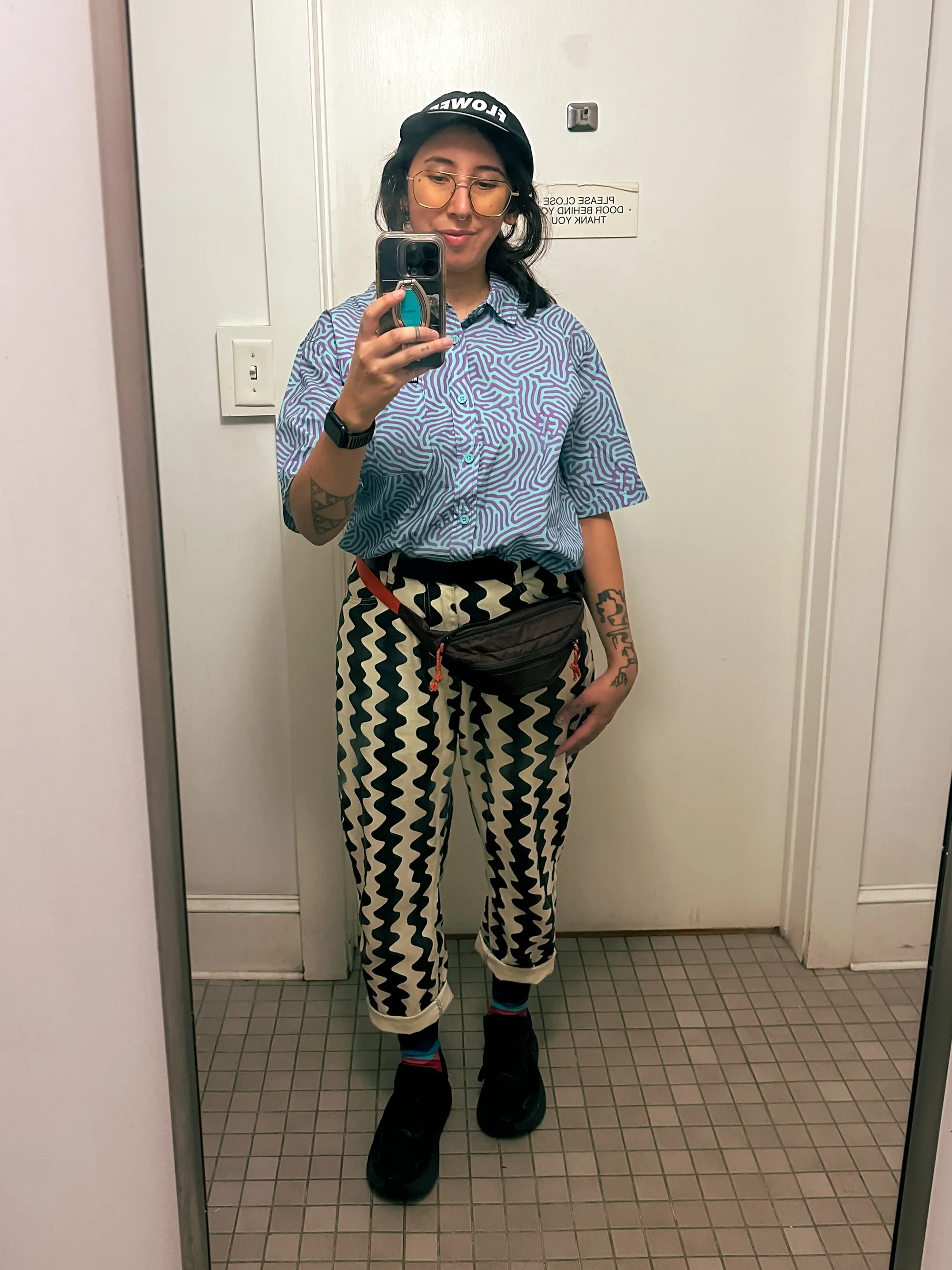
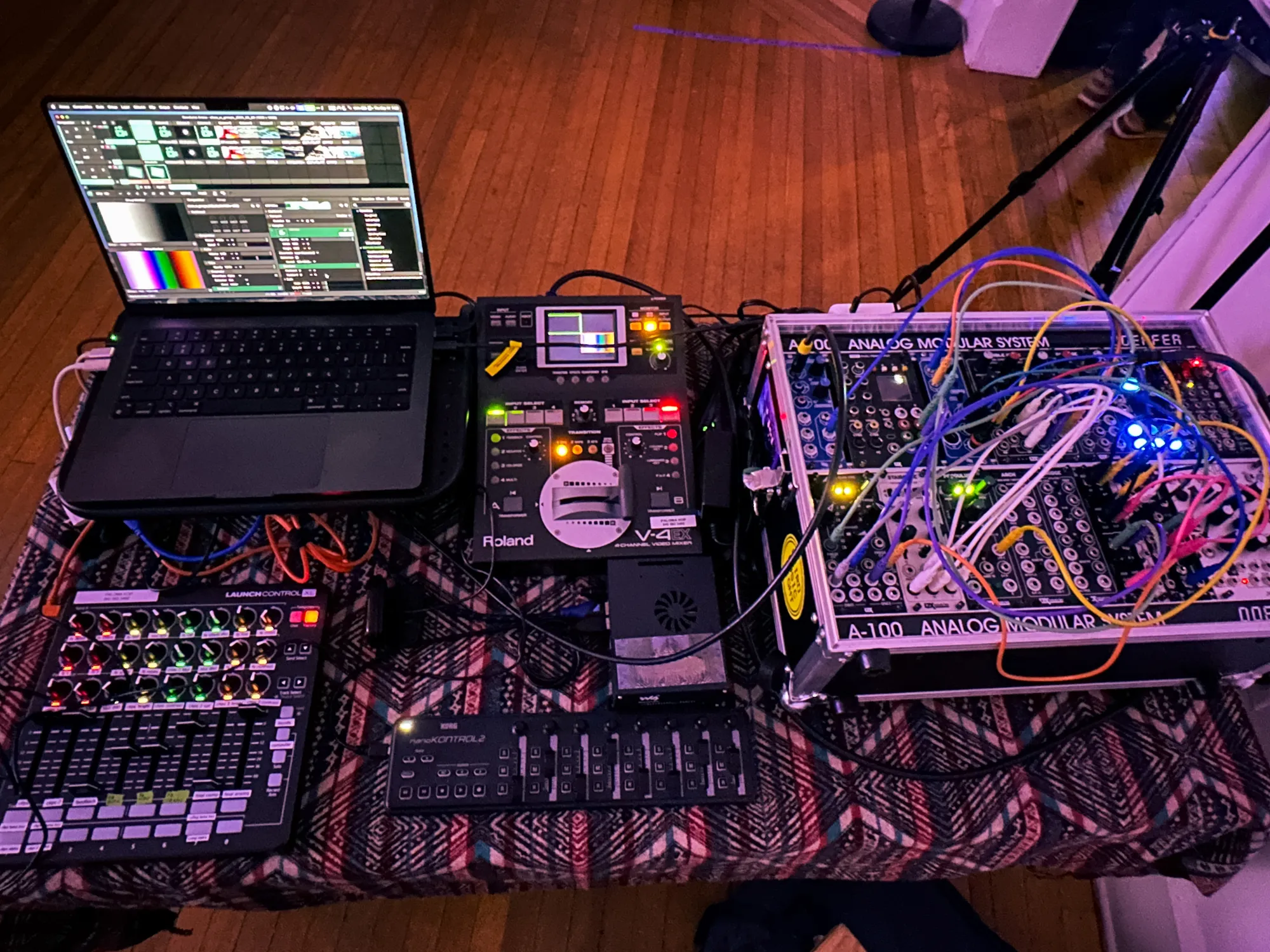
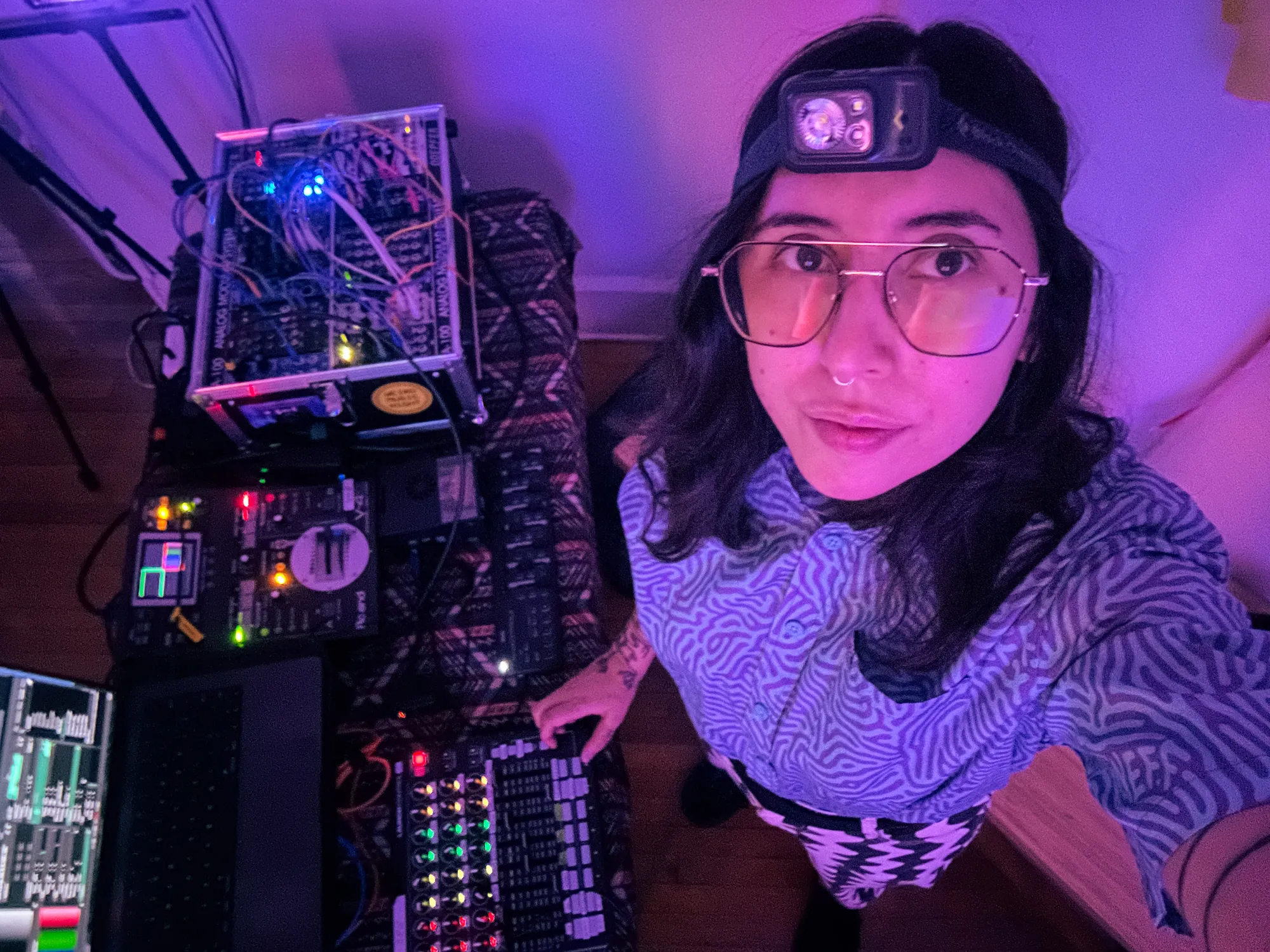
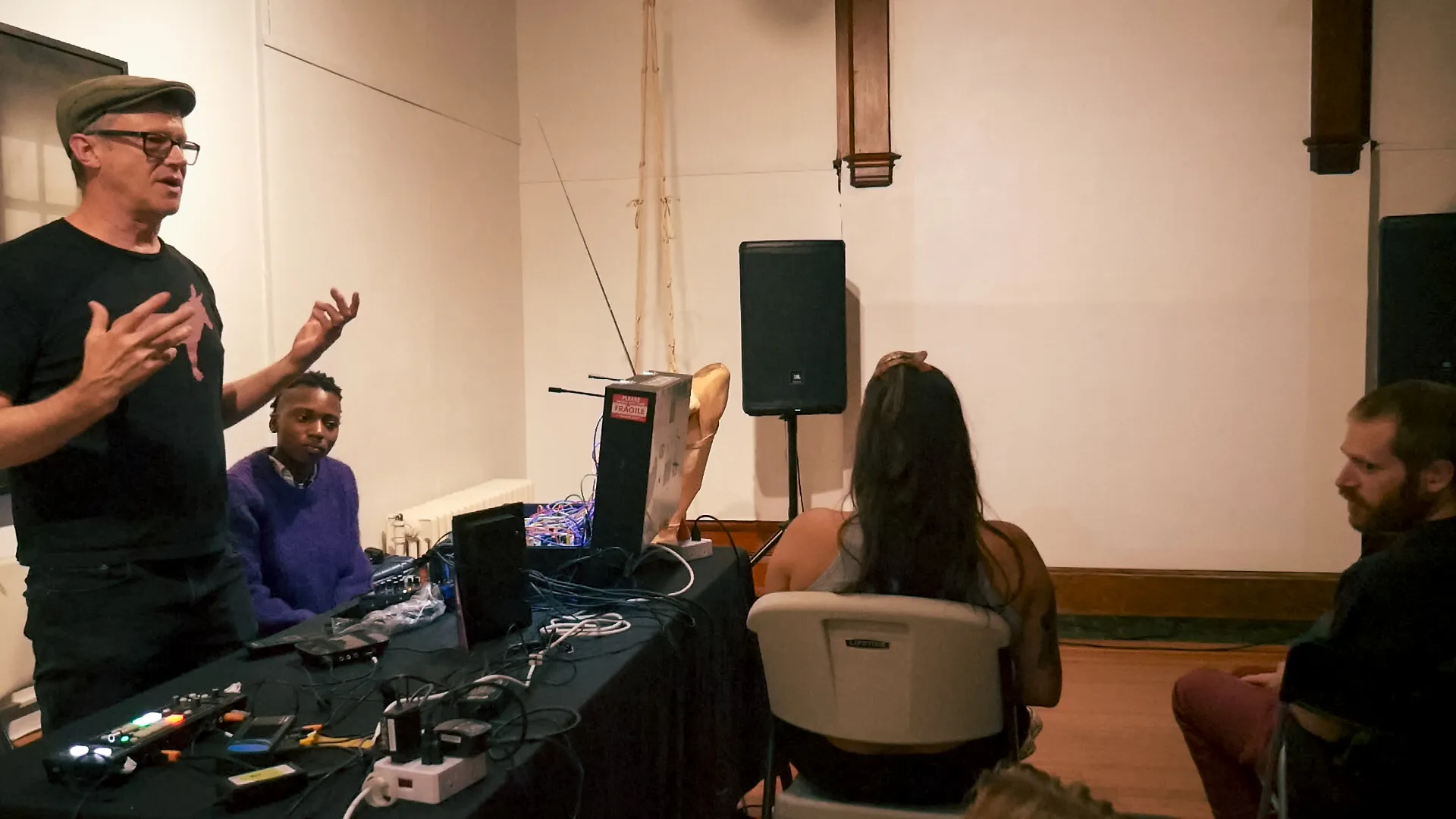
Below, you can find some artifacts, including a video
recording of (most of) our set, and some images. I actually
remembered to snap a few photos, possibly mostly because I
wanted to show off my outfit in which I dressed as much as
possible like my own visuals.
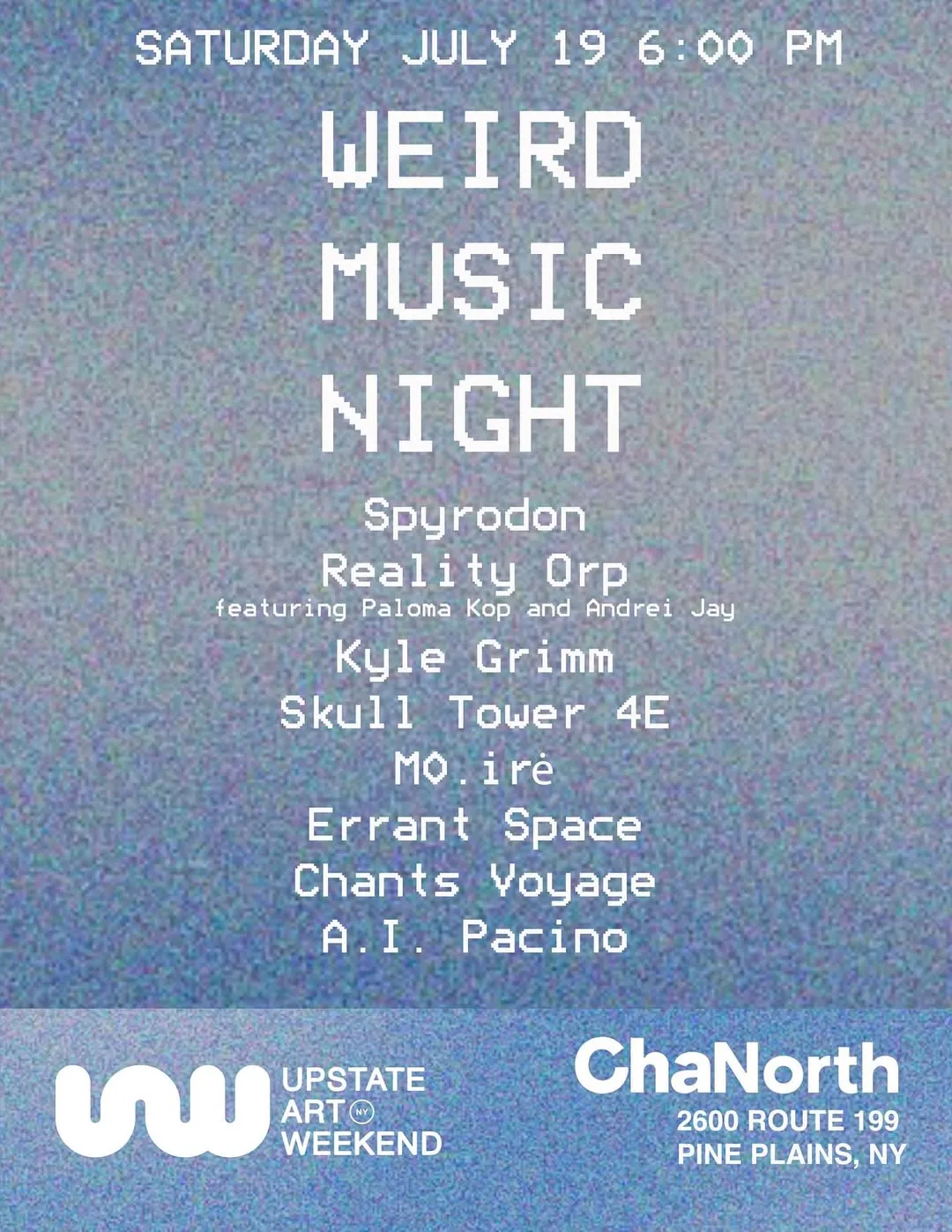
This past Saturday, Andrei and I performed as
REALITY ORP on an outdoor stage
at the
ChaNorth
Residency Space in Upstate NY. As part of Upstate Arts Week,
ChaNorth held an edition of
Weird Music Night, a usually-New-Haven-based showcase, organized and hosted by
John O'Donnell. At this edition, there were eight total acts running
throughout the evening, including Hudson-based artist duo
Spyrodon. On the same site, there were also open studios for the
current artists in residence at ChaNorth, and a sculpture
exhibition in the surrounding woods curated by
Paradice Palace
featuring a cool
sculpture
by our friend Jonathan Sims.
We had a great time performing and hanging out with friends in
the field as the sun went down. It was the sweet kind of
summer show where people are sitting on blankets and there are
random dogs running around among the audience. We were
requested to park our van in the grass right next to the stage
for Aesthetic Reasons.
Below is a short edit of some highlights from our set (or
check out the full-length video recording on
Youtube
or
Peertube!)
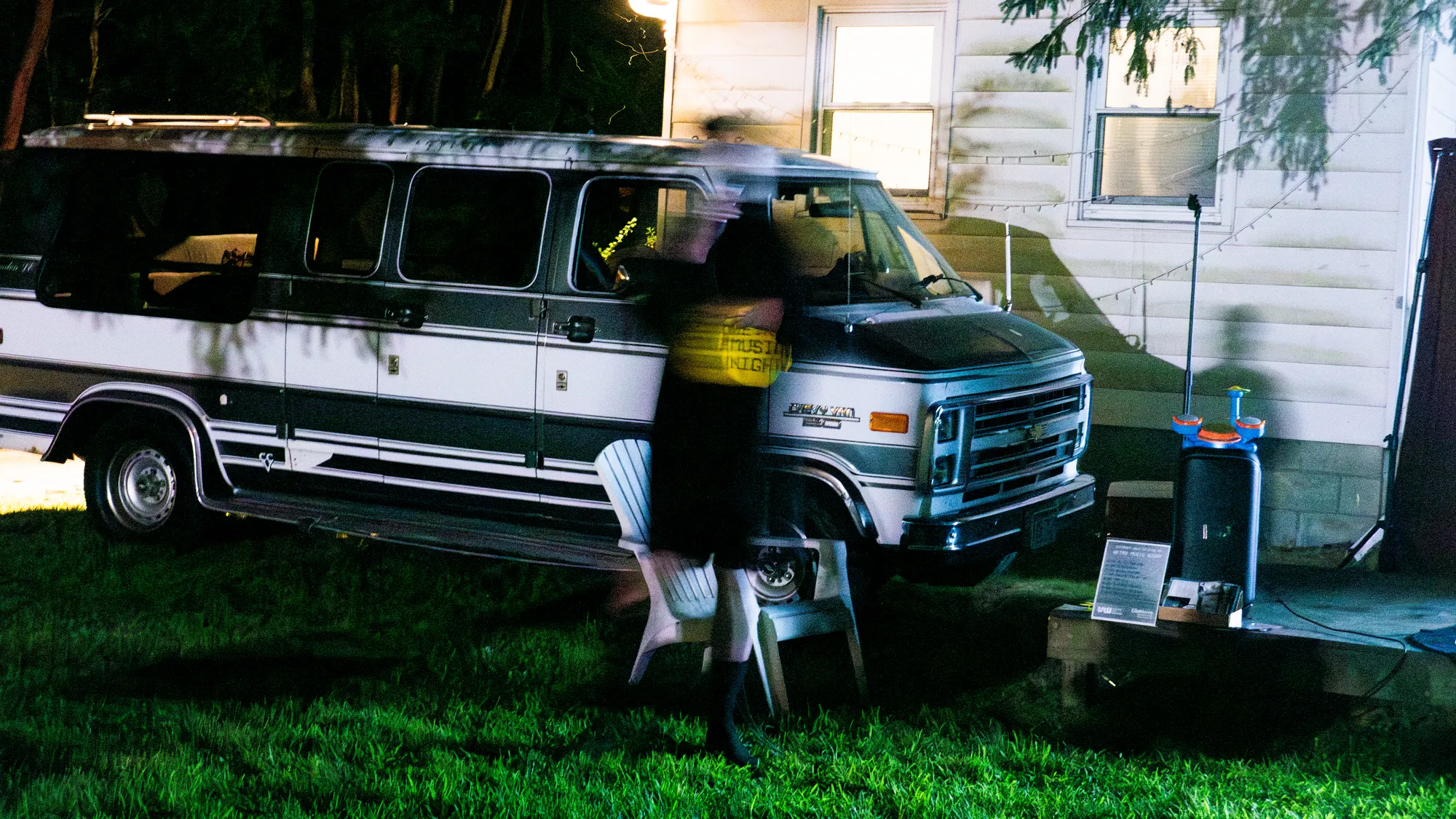
We played after dark, and with the lack of outdoor lighting
most of our photos were unsalvageable, but we did get this pic
of John as a ghost in front of our van:
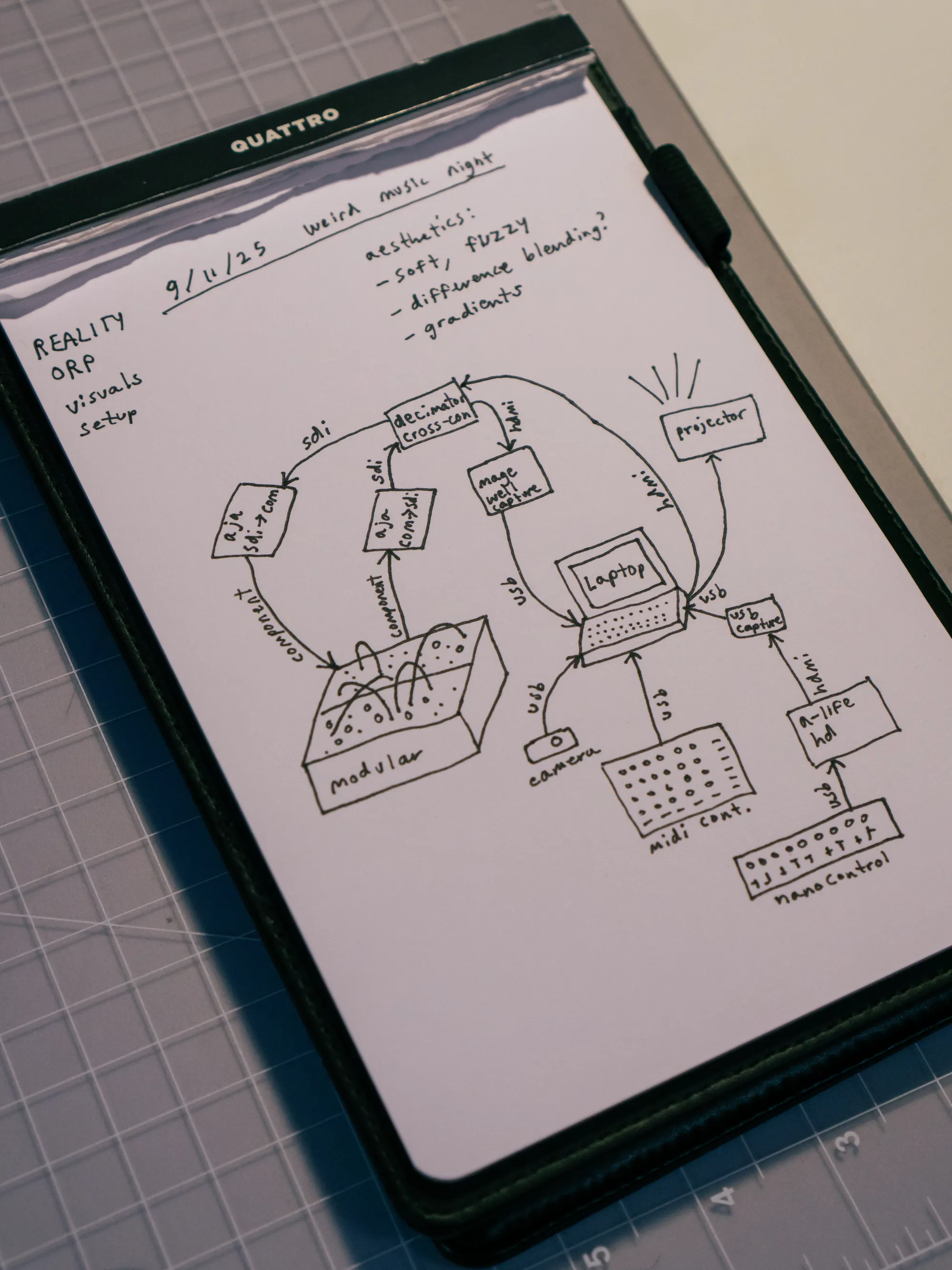
This past Friday, Andrei and I drove down to Greenpoint to
perform an audiovisual set as REALITY ORP at a DIY venue
called Light and Sound Design. The show was organized
by
Ka Baird, and featured fellow audiovisual artist duo
MSHR.
The show went extremely well, and lots of friends came. The
people who ran the venue were super nice, and the space was
very well set up, with lots of comfortable seating and even a
few foam pads and cushions in the very front for people to
watch the show while lying down.
Our friend Alec
was running the quadrophonic sound setup.
After we performed, with Andrei on music (electronics, synths,
percussion, and processed vocals) and me on video (modular
synth, feedback, oscillators, cameras, etc.), I lay down in
the front row to experience MSHR's set. They are currently
touring with two sets: a hardware-based music set, which we
saw them perform in New Haven last week, and an audiovisual
set, which they performed at this show, so we got to see both.
Their performance was really great — though I don't have much
documentation to share here, you can view a past version of
the same set on their Peertube:
MSHR - Network Entity
Thanks to
Jonathan's camerawork, we have a full recording of our set. Watch it
below: